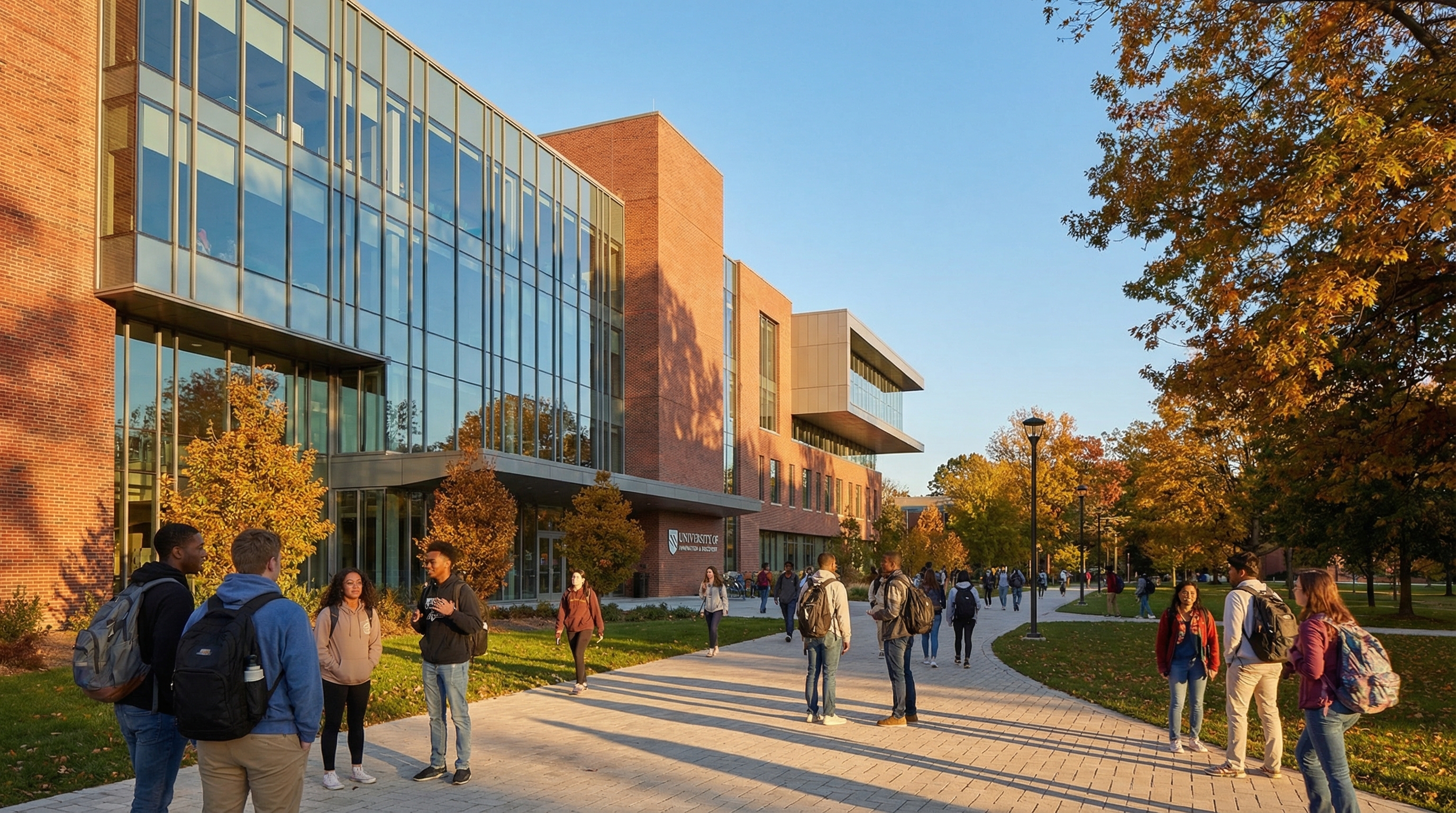
Bachelor's in human resources programs prepare graduates for entry-level HR roles earning a median $72,910 (HR Specialist, BLS May 2024) with advancement to HR Manager at $140,030. The top-ranked program is Rutgers University (score: 95.4/100, 357 graduates/year), followed by Penn State (94.4, 239 graduates) and Cornell (93.7, 273 graduates). Of 50 ranked programs, 24 are SHRM-aligned and 23 are AACSB-accredited. SHRM-CP certification upon graduation adds 14-15% to earnings. Average tuition ranges from under $6,000 at CSU campuses to $65,204 at Cornell.
$72,910
HR Specialist Median
81,800
Annual Job Openings
24
SHRM-Aligned Programs
$18,500
Median Annual Tuition
Source: BLS May 2024
What a Bachelor's in HR Actually Prepares You For
A bachelor's in human resources is the most practical path into the profession. The coursework covers employment law, compensation design, talent acquisition, organizational behavior, and HR information systems. What separates a good program from a generic business degree is depth: you learn how to build compensation structures, design onboarding programs, conduct workplace investigations, and navigate the legal landscape of employment, including Title VII, ADA, FMLA, and FLSA.
The entry-level job market is large and accessible. BLS data shows 944,300 HR specialist positions nationally with 81,800 annual openings and 6% projected growth through 2034. That is significantly more openings per year than most business specializations. The median entry salary of $72,910 beats the overall bachelor's degree median of $80,236 reported by BLS Education Pays data when you factor in that many HR specialists start in their early 20s while overall medians include experienced workers.
The advancement path is clear and well-documented. HR specialist → HR generalist → HR manager → HR director → VP of People → CHRO. About 44% of HR managers hold only a bachelor's degree, which means a graduate degree is not required for management, though it helps. What matters more at the early career stage is SHRM certification and real-world experience with business problems.
The entry credential that qualifies you for HR specialist, recruiter, benefits administrator, and training coordinator roles. 120 credits with core business courses plus HR specialization. Sufficient for most HR positions through mid-management. About 44% of HR managers hold only a bachelor's.
Key Skills
Common Roles
- HR Specialist ($72,910)
- Recruiter ($72,910)
- Training Coordinator ($65,850)
- Benefits Administrator ($77,020)
The advancement credential for strategic leadership. Covers advanced OD, workforce analytics, change management, and executive compensation. Strongest ROI for those targeting director-level roles or Fortune 500 companies. 28% of HR managers hold a graduate degree.
Key Skills
Common Roles
- HR Manager ($140,030)
- Training Manager ($127,090)
- Comp/Benefits Manager ($140,360)
- HR Director ($165,000+)
The industry credential that amplifies a bachelor's degree. SHRM-certified professionals earn 14-15% more than non-certified peers. Programs with SHRM Academic Alignment let you sit for the exam upon graduation, bypassing the standard experience requirement. Pass rate: 67-71%.
Key Skills
Common Roles
- Certified HR Specialist
- HR Generalist
- Talent Acquisition Lead
- Employee Relations Specialist
Source: BLS Education Requirements
What Sets the Top Programs Apart
Rutgers takes the top spot for bachelor's programs (score: 95.4/100), driven by exceptional program output: 357 HR graduates annually, more than any other school in these rankings. The School of Management and Labor Relations is one of the few standalone HR schools in the country, and it maintains both SHRM alignment and AACSB accreditation. At $13,674 in-state, it is also one of the best values in the top 10.
Penn State (94.4) and Cornell (93.7) round out the top three. Cornell's ILR School, founded in 1945, is the most prestigious HR program in the country and charges accordingly ($65,204). Penn State offers a strong middle ground: top-tier rankings, SHRM alignment, AACSB accreditation, and public university pricing ($19,672). For working professionals, Penn State World Campus delivers the identical program online.
Public universities dominate the value equation. Of the top 10, all but Cornell are public institutions with in-state tuition under $20,000. Minnesota ($14,496, 92% grad rate), Michigan State ($16,930, 87% grad rate), and Illinois ($14,768, 90% grad rate) all combine strong graduation rates with SHRM-aligned curricula and deep employer networks. If you are an in-state resident at any of these schools, the ROI calculation is straightforward.
Rutgers University-New Brunswick
Why #1: Rutgers University-New Brunswick
An AACSB-accredited HR program with the personalized attention of a mid-size private university and proximity to major Northeast employers.
Rider University offers a BSBA in Human Resource Management with AACSB accreditation. The campus-based program provides a comprehensive HR curriculum within a mid-size private university setting.
Program Highlights
- SHRM-aligned curriculum
- AACSB-accredited business school
- Campus-based
- 357 annual HR graduates (IPEDS 2023)
Key Strengths
- SHRM-aligned curriculum
- AACSB-accredited business school
- Campus-based
- 357 annual HR graduates (IPEDS 2023)
Admissions
- GPA: 2.5
Program
- 120 credits
Prerequisites
Bachelor's admission requirements
Sources
Pennsylvania State University-Main Campus
Why #2: Pennsylvania State University-Main Campus
Scored 94.4/100 on the HR Program Quality Index, which evaluates program output, curriculum quality (including SHRM alignment), student success, institutional resources, and data transparency using IPEDS 2023 data.
Ranked #2 nationally for bachelor's human resources programs with a score of 94.4/100, based on program output, curriculum quality, student success, and institutional resources according to IPEDS 2023 data.
Program Highlights
- SHRM-aligned program
- AACSB-accredited
- 239 annual HR graduates
Key Strengths
- SHRM-aligned program
- AACSB-accredited
- 239 annual HR graduates
Cornell University
Why #3: Cornell University
Cornell's MILR through the Ivy League ILR School offers unmatched prestige and outcomes, with graduates earning a $97,473 average starting salary at elite employers.
Cornell University offers a 48-credit Master of Industrial and Labor Relations (MILR) through its Ivy League ILR School. The on-campus program produces graduates with a $97,473 average starting salary in HR, with top employers including Estee Lauder, JPMorgan, and S.C. Johnson.
Program Highlights
- SHRM-aligned curriculum
- AACSB-accredited business school
- Specializations: Industrial and Labor Relations
- Ivy League ILR School
- 48 credits
Key Strengths
- SHRM-aligned curriculum
- AACSB-accredited business school
- Specializations: Industrial and Labor Relations
- Ivy League ILR School
Program
- 48 credits
Sources
| 1 | Rutgers University-New Brunswick | New Brunswick, NJ | Public | $13,674 | 8200% | 357 | 95.4 | true | true | false |
| 2 | Pennsylvania State University-Main Campus | University Park, PA | Public | $19,672 | 8700% | 239 | 94.4 | true | true | false |
| 3 | Cornell University | Ithaca, NY | Private | $65,204 | 9500% | 273 | 93.7 | true | true | false |
| 4 | University of Minnesota-Twin Cities | Minneapolis, MN | Public | $14,496 | 9200% | 87 | 87.9 | true | true | false |
| 5 | Michigan State University | East Lansing, MI | Public | $16,930 | 8700% | 104 | 87.7 | true | true | false |
| 6 | University of Oklahoma-Norman Campus | Norman, OK | Public | $5,070 | 8800% | 330 | 82.1 | false | true | false |
| 7 | Ohio State University-Main Campus | Columbus, OH | Public | $11,826 | 9000% | 62 | 81.4 | true | true | false |
| 8 | Temple University | Philadelphia, PA | Public | $21,023 | — | 120 | 77.7 | true | true | false |
| 9 | Florida International University | Miami, FL | Public | $4,721 | — | 135 | 74.5 | true | true | false |
| 10 | University of Maryland Global Campus | Adelphi, MD | Public | $7,632 | 7400% | 369 | 72.4 | true | false | true |
| 11 | Indiana University-Bloomington | Bloomington, IN | Public | $10,312 | 8400% | 24 | 72.2 | true | true | false |
| 12 | Colorado State University Global | Aurora, CO | Public | $8,400 | — | 252 | 71.9 | true | false | true |
| 13 | Wayne State University | Detroit, MI | Public | $13,660 | 8900% | 192 | 67.8 | false | false | false |
| 14 | University of Arizona | Tucson, AZ | Public | $11,546 | 6800% | 250 | 67.2 | false | true | false |
| 15 | Washington University in St Louis | Saint Louis, MO | Private | $61,750 | 9700% | 35 | 65.7 | false | true | false |
| 16 | University of North Carolina at Chapel Hill | Chapel Hill, NC | Public | $7,019 | 9300% | 95 | 65.6 | false | true | false |
| 17 | Regent University | Virginia Beach, VA | Private | $18,986 | 6400% | 21 | 64.9 | true | false | true |
| 18 | Western Governors University | Salt Lake City, UT | Private | $7,710 | — | 828 | 64.5 | true | false | true |
| 19 | Saint Leo University | Saint Leo, FL | Private | $26,240 | 8500% | 41 | 64.4 | true | false | true |
| 20 | Iowa State University | Ames, IA | Public | $8,982 | 9900% | 11 | 64.1 | true | false | false |
| 21 | Loyola University Chicago | Chicago, IL | Private | $50,270 | 9200% | 14 | 63.8 | true | false | false |
| 22 | University of North Texas | Denton, TX | Public | $8,319 | 7000% | 73 | 63.4 | true | false | false |
| 23 | University of Pennsylvania | Philadelphia, PA | Private | $58,620 | 10000% | 6 | 62.1 | false | true | false |
| 24 | University of Michigan-Ann Arbor | Ann Arbor, MI | Public | $17,977 | 9200% | 48 | 61.7 | false | true | false |
| 25 | University of Washington-Seattle Campus | Seattle, WA | Public | $11,524 | 9700% | 31 | 61.3 | false | true | false |
Showing 1–25 of 50
Career Paths
HR Specialist
SOC 13-1071The primary entry point for bachelor's graduates. 944,300 positions nationally with 81,800 annual openings. Handles recruiting, onboarding, employee relations, and benefits administration.
Training and Development Specialist
SOC 13-1151Design and deliver employee training programs. Fastest-growing entry-level HR path at 11% through 2034, driven by AI upskilling demand. 452,300 positions.
Compensation and Benefits Analyst
SOC 13-1141Analyze compensation data, benchmark salaries, and evaluate benefits programs. One of the more quantitative entry-level HR paths.
HR Manager
SOC 11-3121Typical advancement target (3-7 years). Lead HR departments, develop policies, manage employee relations. 221,900 employed, 17,900 annual openings. 90th percentile: $239,200+.
Training and Development Manager
SOC 11-3131Senior leadership path for L&D professionals. Design organizational training strategy and manage program budgets.
Salary by Experience Level
Tuition and Financial Aid
HR program costs vary by institution type. Public universities average $12,000-$18,000 annually for in-state students, while private institutions range from $30,000-$65,000. California State University schools offer the lowest tuition at under $6,000/year, while Cornell's ILR program is the most expensive at $65,204.
Financial aid is widely available. According to Federal Student Aid, 86% of undergraduate students receive some form of financial aid. Many HR programs offer scholarships specifically for business and management students. The Society for Human Resource Management (SHRM) also provides scholarships for HR students.
SHRM Certification and Curriculum Alignment
For bachelor's graduates, SHRM-CP is the credential that matters most. SHRM reports certified professionals earn 14-15% more than non-certified peers, roughly $10,000-$11,000 annually at entry-level salaries. The SHRM-CP pass rate runs 67-71%, which is manageable with proper preparation but not a rubber stamp.
Programs with SHRM Academic Alignment allow students to sit for the SHRM-CP exam upon graduation, bypassing the standard experience requirement. That is a significant advantage: most HR professionals have to wait 3+ years before they can sit for the exam. Among our top 10, eight maintain SHRM alignment: Rutgers, Penn State, Cornell, Minnesota, Michigan State, Illinois, Texas A&M, and Iowa.
The alternative certification track is PHR from HR Certification Institute (HRCI). PHR focuses more on technical HR knowledge and operational implementation, while SHRM-CP emphasizes applied competencies and behavioral scenarios. Both are respected, but SHRM-CP has gained more market share since SHRM separated from HRCI in 2014. Our recommendation for bachelor's graduates: earn SHRM-CP first, then pursue SHRM-SCP after accumulating strategic experience.
Programs by State
Pennsylvania
Ohio
Michigan
New York
Illinois
Texas
Minnesota
California
Florida
Indiana
Frequently Asked Questions
IPEDS 2023, SHRM Academic Alignment, AACSB, ACBSP
HR degree completions from IPEDS 2023 (sqrt normalized, cap 300), plus CIP code breadth and multi-level depth bonuses
SHRM-aligned curriculum (+15 pts) and AACSB (+10) or ACBSP (+5) business school accreditation
6-year graduation rate from IPEDS 2023
Carnegie 2021 classification (R1/R2 research universities score highest)
Completeness of IPEDS reporting (tuition, graduation rate, acceptance rate, Carnegie classification)
Data Sources
- 1.IPEDS 2023 — Integrated Postsecondary Education Data System, National Center for Education Statistics. Program completions, tuition, graduation rates, and institutional characteristics.
- 2.BLS OEWS May 2024 — Occupational Employment and Wage Statistics. National salary data for HR Specialist (13-1071), HR Manager (11-3121), and 5 additional HR occupations.
- 3.BLS Occupational Outlook Handbook — Job growth projections 2024-2034 for HR specialists (6%), HR managers (5%), and training specialists (11%).
- 4.SHRM 2025 Talent Trends — AI adoption in HR (43%), recruiting priorities, and SHRM-CP/SCP certification data.
- 5.Census ACS (via Data USA) — American Community Survey data on HR manager education levels (44% bachelor's, 28% graduate).
- 6.BLS Education Pays — Median weekly earnings by education level. Bachelor's: $1,543/week ($80,236/yr). Master's: $1,840/week ($95,680/yr).
Related Resources

Taylor Rupe
Education Researcher & Data Analyst
B.A. Psychology, University of Washington · B.S. Computer Science, Oregon State University
Taylor combines training in behavioral science with data analysis to evaluate HR education programs. His research methodology uses IPEDS completion data, BLS employment statistics, and SHRM alignment data to produce evidence-based program rankings.