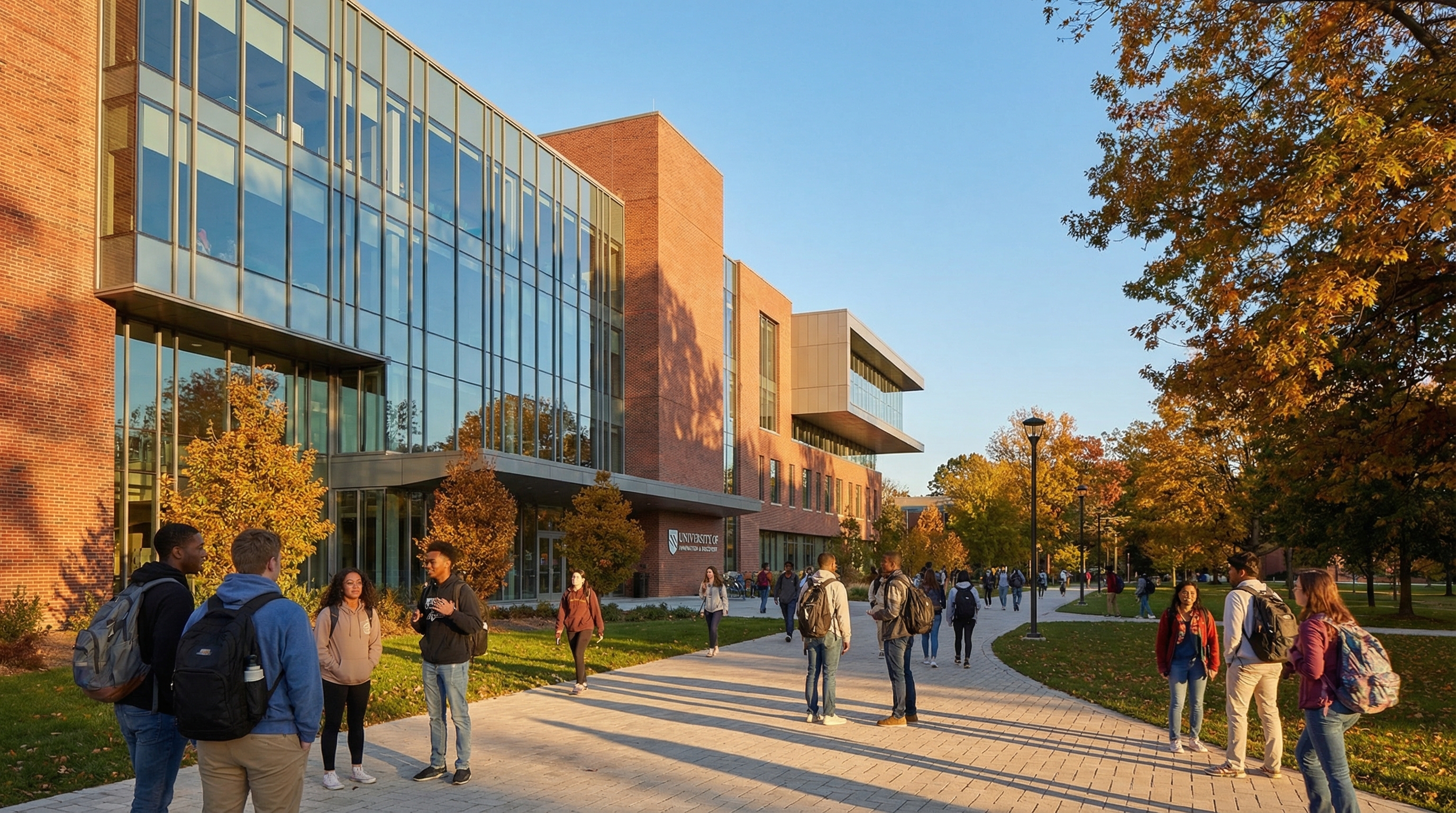
Top-ranked accelerated bachelor's HR programs include University of Maryland Global Campus ($7,632/yr), Western Governors University ($7,710/yr), and Colorado State University Global ($8,400/yr). WGU's competency-based model lets 65% of students finish in 24 months or less. NACE data shows 87.4% of employers hire online and accelerated graduates at the same salary as traditional graduates. 5 of the 14 ranked programs are SHRM-aligned.
14
Accelerated Programs Ranked
87.4%
Employers Hire Online Grads
18-24 mo
Accelerated Completion Time
5
SHRM-Aligned Programs
How Accelerated Bachelor's Programs in HR Work
An accelerated bachelor's in human resources compresses the traditional four-year curriculum into 18-24 months. Programs accomplish this through a combination of shortened academic terms (5-8 weeks instead of 16), year-round scheduling that eliminates summer and winter breaks, and credit transfer policies that recognize prior learning from associate's degrees, workplace certifications, or military training.
The target audience is working adults, not traditional 18-year-old freshmen. Most accelerated bachelor's students are in their late 20s to 40s, often already working in HR-adjacent roles like office administration, recruiting coordination, or payroll processing. They need the bachelor's credential to qualify for HR specialist and HR manager positions that increasingly require a four-year degree. According to BLS data, HR specialist roles pay a median salary of $72,910, and HR managers earn $140,030, but both positions typically list a bachelor's as a minimum qualification.
The coursework covers the same content as a traditional bachelor's program: employment law, compensation and benefits design, organizational behavior, talent acquisition, training and development, HR analytics, and strategic human resource management. SHRM-aligned programs cover all nine competency areas from the SHRM Body of Applied Skills and Knowledge (BASK), which prepares graduates for the SHRM-CP certification exam. The difference between accelerated and traditional programs is pacing and delivery, not substance. Expect 20-25 hours per week of coursework during accelerated terms.
Source: Western Governors University program data, 2025
Accelerated Format Types for Bachelor's Programs
Fully online programs using 5-8 week compressed terms with structured deadlines. Schools like UMGC, CSU Global, and Franklin University offer 6-12 start dates per year. You take one or two courses at a time in rapid sequence. This is the most common format for bachelor's completion and suits students who perform better with external deadlines.
Specifically designed for students with an associate's degree or 60+ prior credits. These programs accept the maximum transfer credits and focus only on upper-division HR coursework. Bellevue University, Thomas Edison State University, and Excelsior University are known for generous transfer policies that can shorten a bachelor's to 12-18 months of new coursework.
Students advance by passing assessments rather than completing fixed class hours. WGU charges $3,830 per 6-month term with no per-credit fees, meaning faster completion costs less. Purdue Global's ExcelTrack uses a similar model. CBE works best for students with years of HR experience who can demonstrate knowledge through exams and projects rather than sitting through lectures on topics they already know.
University of Maryland Global Campus
Why #1: University of Maryland Global Campus
Both SHRM-aligned and an HRCI Education Partner, a rare dual partnership, with SHRM-CP eligibility in a fully online format from a respected state university system.
UMGC offers a Bachelor of Science in Human Resource Management with 120 credit hours. The MSCHE-accredited program is SHRM-aligned and an HRCI Education Partner, fully online with SHRM-CP exam eligibility.
Program Highlights
- SHRM-aligned curriculum
- ACBSP-accredited business school
- HRCI Education Partner
- Online
- SHRM-CP eligibility
Key Strengths
- SHRM-aligned curriculum
- ACBSP-accredited business school
- HRCI Education Partner
- Online
Admissions
- GPA: 2
Program
- 120 credits
Prerequisites
High school diploma or equivalent
Sources
Colorado State University Global
Why #2: Colorado State University Global
Strong value with SHRM alignment, ACBSP accreditation, and maximum scheduling flexibility through 12 annual start dates in 8-week accelerated terms.
CSU Global offers a Bachelor of Science in Human Resource Management with HLC and ACBSP accreditation, SHRM alignment, and 12 start dates per year. The program includes accelerated 8-week terms and a reported 99% alumni employment rate.
Program Highlights
- SHRM-aligned curriculum
- ACBSP-accredited business school
- 12 start dates per year
- 8-week accelerated terms
- 99% alumni employment rate
Key Strengths
- SHRM-aligned curriculum
- ACBSP-accredited business school
- 12 start dates per year
- 8-week accelerated terms
Program
- 120 credits
Prerequisites
High school diploma or equivalent
Sources
Western Governors University
Why #3: Western Governors University
A self-paced, competency-based program aligned with both SHRM and HRCI that embeds industry certifications and lets most students graduate in under two years.
WGU offers a fully online, competency-based BS in Human Resource Management aligned with both SHRM and HRCI standards. The 120-credit program embeds industry certificates and 65% of students finish within 24 months.
Program Highlights
- SHRM-aligned curriculum
- ACBSP-accredited business school
- SHRM + HRCI aligned
- Competency-based
- Embedded industry certificates
Key Strengths
- SHRM-aligned curriculum
- ACBSP-accredited business school
- SHRM + HRCI aligned
- Competency-based
Program
- 120 credits
Prerequisites
Open enrollment
Sources
| 1 | University of Maryland Global Campus | Adelphi, MD | Public | $7,632 | 7400% | 369 | 72.4 | true | false | true |
| 2 | Colorado State University Global | Aurora, CO | Public | $8,400 | — | 252 | 71.9 | true | false | true |
| 3 | Western Governors University | Salt Lake City, UT | Private | $7,710 | — | 828 | 64.5 | true | false | true |
| 4 | Purdue University Global | West Lafayette, IN | Public | $10,080 | — | 66 | 54.8 | true | false | true |
| 5 | Bellevue University | Bellevue, NE | Private | $8,136 | 1200% | 77 | 49.8 | true | false | true |
| 6 | Franklin University | Columbus, OH | Private | $9,552 | — | 81 | 42.9 | false | false | true |
| 7 | Thomas Edison State University | Trenton, NJ | Public | $6,638 | — | 19 | 36 | false | false | true |
| 8 | National University | San Diego, CA | Private | $13,320 | — | 5 | 34.3 | false | false | true |
| 9 | Excelsior University | Albany, NY | Private | $0 | — | 7 | 33.6 | false | false | true |
| 10 | American Public University System | Charles Town, WV | For-Profit | $8,400 | — | 81 | 27.9 | false | false | true |
| 11 | Capella University | Minneapolis, MN | For-Profit | $14,436 | 1300% | 166 | 27.5 | false | false | true |
| 12 | Grand Canyon University | Phoenix, AZ | For-Profit | $16,390 | 3400% | 74 | 25.7 | false | false | true |
| 13 | Rasmussen University-Florida | Ocala, FL | For-Profit | $13,452 | — | 64 | 25.1 | false | false | true |
| 14 | Post University | Waterbury, CT | For-Profit | $15,834 | 2800% | 42 | 20.8 | false | false | true |
Do Employers Value Accelerated Bachelor's Degrees?
The short answer: yes, provided the program is accredited. According to NACE's 2024 employer survey, 87.4% of hiring managers treat online and accelerated degrees the same as traditional degrees when making salary offers. The key factor is regional accreditation, not delivery format.
All 14 programs in these rankings hold regional accreditation (MSCHE, HLC, SACSCOC, or equivalent), and five carry SHRM alignment. For HR hiring managers specifically, SHRM alignment is a stronger signal than delivery format because it confirms the curriculum covers the competencies tested on the SHRM-CP and SHRM-SCP exams. A hiring manager reviewing two candidates for an HR specialist role will weigh SHRM alignment, relevant internship experience, and certifications held well above whether the degree took two years or four.
That said, some nuance applies. For-profit institutions, regardless of delivery format, face more employer skepticism. Five of the 14 programs in these rankings are from for-profit schools, and they score lower on our methodology due to weaker graduation rates and institutional resources. If employer perception matters to your career plan, prioritize the public and nonprofit institutions in the top half of the rankings.
Career Paths
Salary by Experience Level
5 Steps to Complete an Accelerated Bachelor's in HR
Maximize Your Transfer Credits
Most accelerated bachelor's programs accept 60-90 transfer credits from prior coursework, military experience, and professional certifications. Thomas Edison State University and Excelsior University are especially generous. Gather all transcripts and have them evaluated before enrolling so you know exactly how many credits remain.
Pick the Right Delivery Model
Compressed terms (5-8 weeks) suit students who want structured deadlines. Competency-based education at [WGU](/bachelors/shrm-aligned/) or Purdue Global ExcelTrack suits experienced HR professionals who can test out of courses. If you have 5+ years of HR experience, CBE programs can save you thousands because faster completion means fewer terms of tuition.
Verify SHRM Alignment
If professional certification is part of your career plan, choose a [SHRM-aligned program](/bachelors/shrm-aligned/). SHRM alignment means the curriculum covers all nine BASK competency areas, which directly prepares you for the SHRM-CP exam. Five of our 14 ranked programs carry this alignment.
Plan for 20-25 Hours Per Week
Accelerated terms compress 16 weeks of material into 5-8 weeks. That means roughly double the weekly workload of a traditional semester. Before enrolling, confirm that your employer, family, and personal schedule can accommodate 20-25 dedicated study hours per week for the duration of the program.
Stack a Certification on Top
A bachelor's degree plus a professional certification is the strongest combination for HR career advancement. The [SHRM-CP](/certifications/) requires a bachelor's plus one year of HR experience (or a master's alone). The [PHR from HRCI](/certifications/) has similar requirements. Plan to sit for one of these exams within six months of graduation.
Is an Accelerated Bachelor's Right for You?
Accelerated bachelor's programs work best for a specific profile: working adults with some prior college credits or professional experience who need a bachelor's degree to advance in HR but cannot step away from their career for four years.
The ideal candidate has an associate's degree or 30-60 prior credits, 2+ years of work experience (in any field, not just HR), and the time discipline to handle 20-25 hours of weekly coursework alongside a full-time job. If that describes you, an accelerated program can save you 2-3 years compared to a traditional path.
Think carefully before choosing accelerated if you have no prior college credits and no professional experience. Starting a 120-credit bachelor's from scratch in an accelerated format is technically possible but significantly more demanding than doing so with transfer credits. In that scenario, consider starting with an accelerated associate's first, then rolling those credits into a bachelor's completion program. The two-step approach breaks the workload into manageable phases and gives you an interim credential that qualifies you for entry-level HR roles while you finish the bachelor's.
Frequently Asked Questions
IPEDS 2023, SHRM Academic Alignment, AACSB, ACBSP
HR degree completions from IPEDS 2023 (sqrt normalized, cap 300), plus CIP code breadth and multi-level depth bonuses
SHRM-aligned curriculum (+15 pts) and AACSB (+10) or ACBSP (+5) business school accreditation
6-year graduation rate from IPEDS 2023
Carnegie 2021 classification (R1/R2 research universities score highest)
Completeness of IPEDS reporting (tuition, graduation rate, acceptance rate, Carnegie classification)
Sources
- 1.Bureau of Labor Statistics -- Occupational Employment and Wage Statistics — HR occupation salary and employment data (May 2024)
- 2.IPEDS -- Integrated Postsecondary Education Data System — Program completions, tuition, graduation rates (2023 data year)
- 3.Society for Human Resource Management (SHRM) — HR curriculum alignment standards and industry benchmarks
- 4.NACE -- National Association of Colleges and Employers — Employer hiring practices and salary data for online/accelerated graduates (2024)
- 5.Western Governors University — Competency-based program data and completion statistics
Related Content

Taylor Rupe
Education Researcher & Data Analyst
B.A. Psychology, University of Washington · B.S. Computer Science, Oregon State University
Taylor combines training in behavioral science with data analysis to evaluate HR education programs. His research methodology uses IPEDS completion data, BLS employment statistics, and SHRM alignment data to produce evidence-based program rankings.