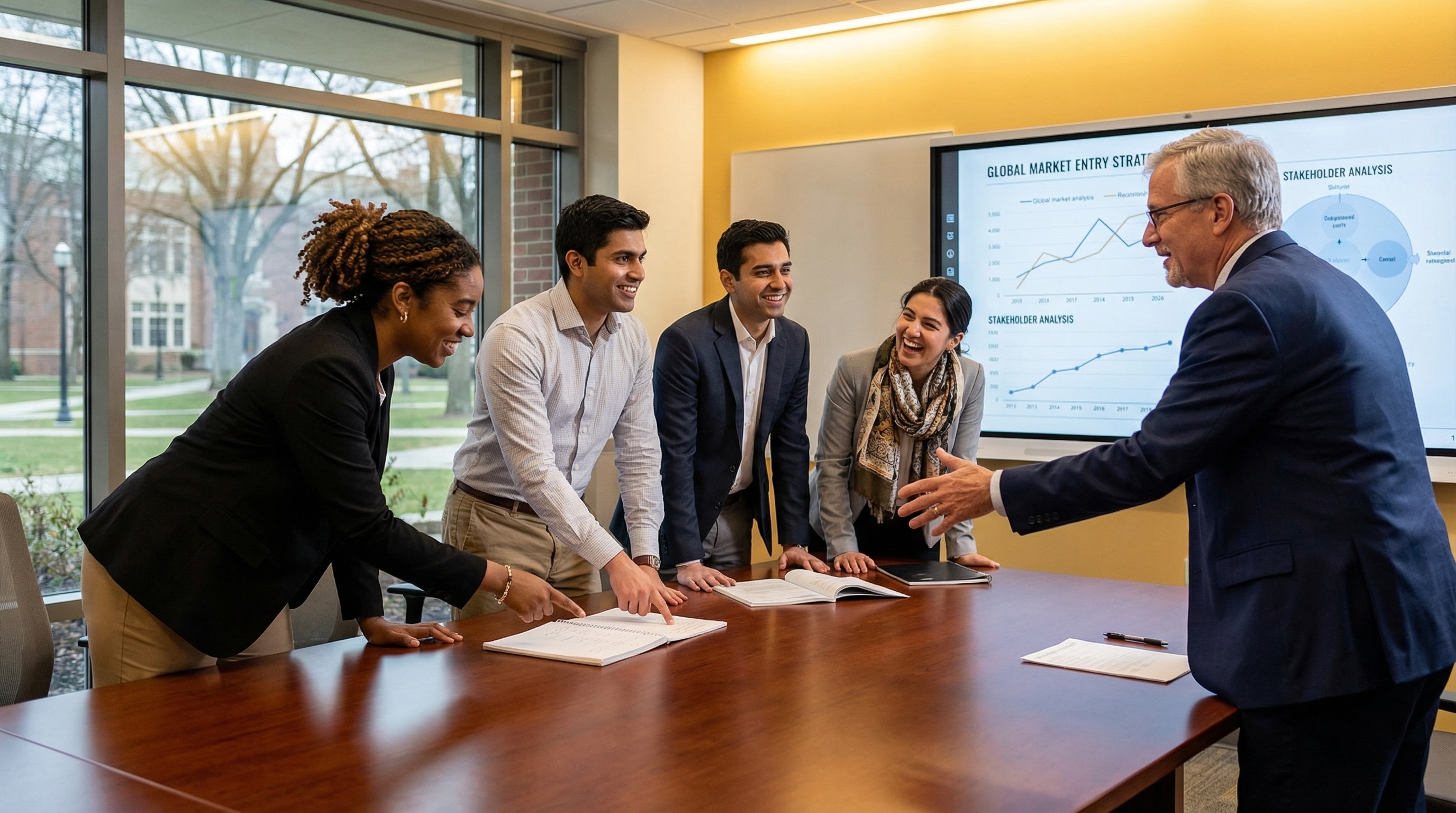
A master's in labor relations prepares you for collective bargaining, grievance arbitration, and union-management strategy. Specialists earn a $93,500 median salary (BLS 2024), with senior directors clearing $140,000+. Cornell ILR leads the field, but public R1 options at Illinois, Rutgers, and Minnesota deliver strong training at roughly half the cost.
$93,500
Median Salary
~5,100
Annual Job Openings
11.2%
Union Representation Rate
81.9%
NLRB Election Win Rate
What Labor Relations Actually Involves
Labor relations is one of the most misunderstood corners of human resources. People tend to conflate it with "employee relations" -- the broader category of workplace culture, engagement surveys, and performance conversations. Labor relations is narrower and more adversarial by design. It centers on the legal, procedural, and strategic dimensions of the relationship between organized labor and management, governed primarily by the National Labor Relations Act (NLRA) and administered by the National Labor Relations Board (NLRB).
Beyond unionized settings, labor relations professionals handle unfair labor practice charges, navigate strikes and lockouts, and advise executives on labor strategy during mergers and acquisitions. Public-sector labor relations adds another layer, since state and municipal employees are covered by state labor laws rather than the NLRA, and the rules vary dramatically. A master's in employment law covers the statutory framework, but a labor relations concentration goes deeper into the mechanics of bilateral negotiation and contract administration that define this specialty.
The distinction matters for career planning. An HR generalist might handle a wide range of people-management tasks, but a labor relations specialist needs to read contract language with the precision of an attorney, understand economic costing models for wage proposals, and maintain working relationships with union officials even during contentious negotiations. It's a field where behavioral science meets contract law, and a good master's program prepares you for both.
The negotiation process between union representatives and management over wages, hours, benefits, seniority provisions, and grievance procedures. A typical collective bargaining agreement (CBA) runs dozens of pages and gets reopened every two to five years, with ongoing interpretation and administration between negotiations.
Key Skills
Common Roles
- Labor Relations Specialist
- Chief Negotiator
- Union Representative
A multi-step dispute resolution process built into CBAs. When a contract violation is alleged and can't be resolved internally, the case proceeds to a neutral arbitrator whose decision is typically binding. Preparing for arbitration requires case-building skills similar to litigation.
Key Skills
Common Roles
- Grievance Specialist
- Labor Arbitrator
- Union Steward
When employees file a petition with the NLRB for a representation election, the labor relations team manages the employer's response within legal boundaries. NLRB data from FY2025 shows about 2,100 petition filings, with an 81.9% union win rate in elections.
Key Skills
Common Roles
- Labor Relations Manager
- Employee Relations Director
- Campaign Coordinator
Charges filed with the NLRB alleging violations of the NLRA by employers or unions. Responding to ULP charges, preparing position statements, and attending NLRB hearings are core labor relations functions that require both legal knowledge and strategic judgment.
Key Skills
Common Roles
- Labor Relations Specialist
- Labor Attorney
- NLRB Field Examiner
Source: BLS OES May 2024
Cornell University
Why #1: Cornell University
Cornell's MILR through the Ivy League ILR School offers unmatched prestige and outcomes, with graduates earning a $97,473 average starting salary at elite employers.
Cornell University offers a 48-credit Master of Industrial and Labor Relations (MILR) through its Ivy League ILR School. The on-campus program produces graduates with a $97,473 average starting salary in HR, with top employers including Estee Lauder, JPMorgan, and S.C. Johnson.
Program Highlights
- SHRM-aligned curriculum
- AACSB-accredited business school
- Specializations: Industrial and Labor Relations
- Ivy League ILR School
- 48 credits
Key Strengths
- SHRM-aligned curriculum
- AACSB-accredited business school
- Specializations: Industrial and Labor Relations
- Ivy League ILR School
Program
- 48 credits
Sources
Rutgers University-New Brunswick
Why #2: Rutgers University-New Brunswick
Rutgers MHRM is the only STEM-designated HR master's in the country, combining AACSB accreditation with a 96% placement rate at employers like GE, IBM, and J&J.
Rutgers University offers a 48-credit MHRM (36 credits available online) through the School of Management and Labor Relations. It is the only STEM-designated HR master's in the United States, with AACSB accreditation, SHRM alignment, and a 96% placement rate. Top employers include GE, IBM, J&J, and PepsiCo.
Program Highlights
- SHRM-aligned curriculum
- AACSB-accredited business school
- Specializations: Human Resource Management
- ONLY STEM-designated HR master's in US
- AACSB accredited
Key Strengths
- SHRM-aligned curriculum
- AACSB-accredited business school
- Specializations: Human Resource Management
- ONLY STEM-designated HR master's in US
Program
- 48 credits
Sources
University of Minnesota-Twin Cities
Why #3: University of Minnesota-Twin Cities
Choose UMN for its 75-year program legacy, Carlson School prestige, AACSB accreditation, and strong Minnesota-based employer network.
The University of Minnesota-Twin Cities offers a 40-credit Master of Human Resources and Industrial Relations (MHRIR) through the Carlson School of Management. With a 75-year legacy, AACSB accreditation, and SHRM recognition, it achieves 92% placement at $85,006 mean starting salary.
Program Highlights
- SHRM-aligned curriculum
- AACSB-accredited business school
- 75-year legacy program
- AACSB + HLC accredited
- SHRM-recognized
Key Strengths
- SHRM-aligned curriculum
- AACSB-accredited business school
- 75-year legacy program
- AACSB + HLC accredited
Program
- 40 credits
Prerequisites
Bachelor's degree
Sources
| 1 | Cornell University | Ithaca, NY | Private | $65,204 | 9500% | 60 | 89.1 | true | true | false |
| 2 | Rutgers University-New Brunswick | New Brunswick, NJ | Public | $13,674 | 8200% | 3 | 88.7 | true | true | false |
| 3 | University of Minnesota-Twin Cities | Minneapolis, MN | Public | $14,496 | 9200% | 65 | 87.4 | true | true | false |
| 4 | University of Illinois Urbana-Champaign | Champaign, IL | Public | $14,768 | 9000% | 138 | 86.5 | true | true | false |
| 5 | Pennsylvania State University-Main Campus | University Park, PA | Public | $19,672 | 8700% | 17 | 80.6 | true | true | false |
| 6 | Michigan State University | East Lansing, MI | Public | $16,930 | 8700% | 51 | 79.8 | true | true | false |
| 7 | Seton Hall University | South Orange, NJ | Private | $48,670 | 9300% | 32 | 57.3 | false | false | false |
| 8 | Wayne State University | Detroit, MI | Public | $13,660 | 8900% | 5 | 49.1 | false | false | false |
| 9 | Hawaii Pacific University | Honolulu, HI | Private | $35,580 | 9000% | 6 | 38.5 | false | false | false |
| 10 | Pennsylvania State University-World Campus | University Park, PA | Public | $15,204 | 5600% | 92 | 38.1 | false | false | false |
| 11 | Inter American University of Puerto Rico-Metro | San Juan, PR | Private | $4,848 | — | 5 | 37.6 | false | false | false |
| 12 | Cleveland State University | Cleveland, OH | Public | $12,503 | — | 13 | 36.3 | false | false | false |
| 13 | Marshall University | Huntington, WV | Public | $7,372 | — | 13 | 32.3 | false | false | false |
| 14 | University of Rhode Island | Kingston, RI | Public | $14,116 | — | 4 | 30.3 | false | false | false |
Career Paths
Labor Relations Specialist
SOC 13-1075Handles grievance processing, contract research, and day-to-day CBA administration. The entry point for most labor relations careers, with ~5,100 annual openings driven by retirements.
HR Manager (Labor Relations)
SOC 11-3121Oversees the labor relations function, leads contract negotiations, and advises executives on labor strategy. The natural progression after 5-8 years in specialist roles.
Compensation & Benefits Manager
SOC 11-3111Handles the economic side of contract negotiations -- wage proposals, benefits costing, and total compensation modeling. Critical during CBA reopener periods.
HR Specialist (General)
SOC 13-1071Broad people-management role that some practitioners start in before specializing. The $20,590 salary gap with labor relations reflects the negotiation premium.
Salary by Experience Level
Setting matters more in labor relations than in most HR specialties. Government positions, which account for a substantial share of the field since public employees are heavily unionized, pay a median of about $86,650. Corporate management positions push that to roughly $98,450. The BLS projects little or no change in employment for labor relations specialists through 2034, with approximately 5,100 annual openings driven mostly by retirements and turnover rather than growth.
That flat projection can be misleading. Union membership held at 10.0% of wage and salary workers in 2025, with 11.2% covered by union contracts (BLS Union Members Summary, January 2026). While overall union density has been flat, the composition is shifting -- organizing activity in sectors like healthcare, higher education, and tech has created new demand for labor relations expertise in industries that historically had little of it. Geography shapes opportunity significantly: states with higher union density -- New York, Hawaii, Washington, Oregon, California -- have more positions and higher compensation.
Next Steps
Check for Dedicated Labor Relations Coursework
Generic HR programs cover collective bargaining as a chapter within a single employment law course. A genuine labor relations concentration will offer separate courses in collective bargaining, grievance arbitration, labor economics, and labor law. The more dedicated courses, the better prepared you'll be.
Prioritize Experiential Components
Look for programs with mock arbitration exercises using actual CBA language, and simulated collective bargaining sessions that stretch over multiple weeks with full economic costing, proposal exchange, and caucusing. These exercises build procedural fluency you can't get from case studies alone.
Verify Both-Sides Curriculum
The best programs bring in practitioners from union leadership alongside management consultants, so students understand the strategic calculus on both sides. A management-only perspective creates blind spots that hurt you at the bargaining table.
Evaluate SHRM and AACSB Status
Programs aligned with SHRM's curriculum guidelines (six of our top 10 carry this designation) ensure you meet educational requirements for SHRM-SCP certification. AACSB accreditation signals rigorous quality standards. Some top programs sit in dedicated industrial relations schools rather than business schools -- Cornell's ILR School being the prime example.
Assess Format and Practicum Placements
Traditional two-year programs offer deeper immersion, including internship semesters with unions, management-side law firms, or NLRB offices. For online or hybrid options, ask specifically how the program handles negotiation and arbitration simulations. Programs partnering with the Federal Mediation and Conciliation Service (FMCS) or state labor boards for practica are particularly valuable.
The Psychology of Negotiation and Conflict
Labor negotiations are fundamentally a psychological exercise layered on top of an economic one. Understanding this dual nature is what separates effective negotiators from people who simply present proposals and wait. The foundational distinction in negotiation theory is between distributive bargaining -- where one side's gain is the other's loss, as with wage increases funded from a fixed budget -- and integrative bargaining, where both sides can expand the total value through creative problem-solving. Most real-world labor negotiations involve elements of both, sometimes within the same session.
The concept of BATNA (Best Alternative to a Negotiated Agreement) drives much of the power dynamic at the table. A union whose members are willing to strike has a strong BATNA; management in a tight labor market where replacement workers are scarce has a weak one. Understanding your own BATNA and accurately assessing the other side's is a core skill that good master's programs develop through scenario analysis and simulation. Getting this wrong -- overestimating your leverage or underestimating the union's solidarity -- leads to protracted disputes, work stoppages, and damaged relationships that take years to repair.
Procedural justice matters as much as outcomes. Research in organizational psychology consistently shows that people evaluate the fairness of a process independently from the fairness of the result. A union membership that feels heard during negotiations -- that sees its representatives given adequate time, access to information, and respectful treatment -- is more likely to ratify a contract even if the economic terms are modest. Conversely, a generous economic package pushed through a rushed process breeds resentment and grievances. This is where training in organizational development intersects with labor relations: the relational skills that make contract administration workable day-to-day.
Intergroup conflict theory explains why labor negotiations can become emotionally charged even when the economic stakes are manageable. Unions and management develop strong group identities, and the negotiation process can trigger in-group/out-group dynamics where each side views the other with suspicion regardless of the specific proposals on the table. Skilled labor relations professionals learn to manage these dynamics by separating people from positions, maintaining informal channels of communication outside formal bargaining sessions, and knowing when to bring in a federal mediator to break an impasse before it hardens.
The emotional labor of this work is substantial and under-discussed. You will sit through grievance hearings where an employee's livelihood is on the line and you represent the side that terminated them. You will negotiate contracts knowing that the economic constraints are real and that someone -- management or workers -- will leave the table dissatisfied. The best programs acknowledge this dimension and build in coursework on conflict management, emotional intelligence, and the ethical obligations of the labor relations practitioner. It's not enough to know the law; you need to navigate the human cost of applying it.
Next Steps
Confirm Your Eligibility
Most programs accept applicants from any undergraduate background, though psychology, political science, economics, or business are common. A 3.0 GPA is the typical minimum, and many programs now make the GRE optional. Two to three years of experience in HR, union environments, government labor agencies, or community organizing differentiates competitive applicants.
Prepare Your Application Package
Gather transcripts, two to three recommendation letters (at least one professional), a personal statement explaining your interest in labor relations specifically, and a resume. Programs like Cornell's MPS/MILR and Rutgers' MHRM weight professional experience heavily, so career changers with strong work histories can offset a middling undergraduate GPA.
Evaluate Program Length and Format
Options range from 12 months (accelerated cohort) to 24 months (traditional full-time) to 30-36 months (part-time for working professionals). For online or hybrid options, ask specifically about how negotiation simulations and mock arbitrations are conducted -- several programs use intensive weekend residencies or summer institutes to preserve these experiential components.
Compare Tuition and Financial Support
Our top 10 ranges from ~$32,400 at Rutgers (public, in-state) to over $66,000 at USC (private). Public R1 universities like Illinois ($35,900), Minnesota ($34,410), and Ohio State ($37,332) offer strong programs at moderate cost. Many public universities offer graduate assistantships with tuition waivers, and some programs have union or employer association partnerships that fund scholarships.
Target Practicum and Placement Partners
Programs that partner with the Federal Mediation and Conciliation Service (FMCS) or state labor boards for practicum placements provide direct access to real-world labor relations work. Internship semesters with unions, management-side law firms, or NLRB offices offer the hands-on experience that employers value most.
Data Sources
Salary data from Bureau of Labor Statistics Occupational Employment and Wage Statistics (OES), May 2024 release. SOC codes referenced: 13-1075 (Labor Relations Specialists), 11-3121 (Human Resources Managers), 11-3111 (Compensation and Benefits Managers). Union membership and representation statistics from BLS Union Members Summary, January 2026 (reporting 2025 data). NLRB petition and election data from NLRB Annual Report, FY2025. Tuition and program completion data from IPEDS 2023. SHRM alignment status verified against SHRM's published list of academically aligned programs. AACSB accreditation verified against AACSB International's accredited school directory.
This page provides educational information about labor law topics. It is not legal advice. Consult a qualified labor attorney for guidance on specific legal questions.
Frequently Asked Questions About Labor Relations Master's in HR
IPEDS 2023, SHRM Academic Alignment, AACSB, ACBSP
HR degree completions from IPEDS 2023 (sqrt normalized, cap 300), plus CIP code breadth and multi-level depth bonuses
SHRM-aligned curriculum (+15 pts) and AACSB (+10) or ACBSP (+5) business school accreditation
6-year graduation rate from IPEDS 2023
Carnegie 2021 classification (R1/R2 research universities score highest)
Completeness of IPEDS reporting (tuition, graduation rate, acceptance rate, Carnegie classification)
Sources
- 1.Bureau of Labor Statistics -- Occupational Employment Statistics — HR occupation salary and employment data (May 2024)
- 2.Society for Human Resource Management (SHRM) — HR industry research, benchmarks, and best practices
Related Resources

Taylor Rupe
Education Researcher & Data Analyst
B.A. Psychology, University of Washington · B.S. Computer Science, Oregon State University
Taylor combines training in behavioral science with data analysis to evaluate HR education programs. His research methodology uses IPEDS completion data, BLS employment statistics, and SHRM alignment data to produce evidence-based program rankings.