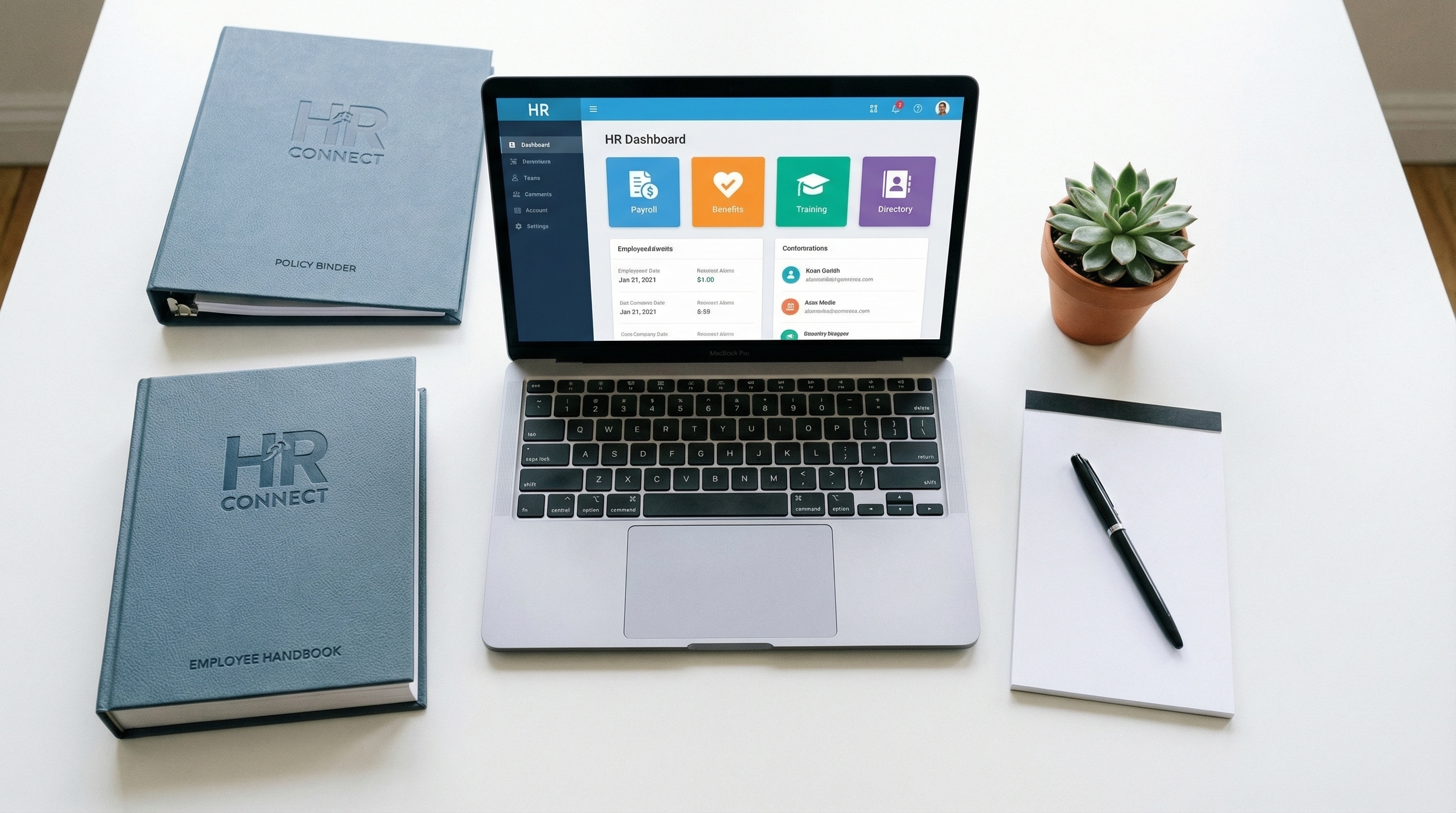
- 1.Onboarding starts before Day 1 with preboarding. Equipment, access, paperwork, and a welcome plan should all be ready before your new hire walks in the door
- 2.First impressions are permanent impressions. Day 1 sets the emotional tone for the entire employment relationship, so don't let it be a scramble of missing badges and broken logins
- 3.The 30-60-90 day structure provides clear milestones for both the new hire and manager. Without checkpoints, small problems become big problems that surface too late
- 4.Good onboarding reduces first-year turnover by up to 50%. That's not a soft HR metric. It's a direct impact on recruiting costs and team productivity
- 5.Assign a buddy or mentor beyond the direct manager. New hires need someone they can ask 'dumb questions' without worrying about how it looks
82%
Retention Boost From Great Onboarding
20%
New Hires Leave Within 45 Days
90 days
Standard Onboarding Timeline
70%
Productivity Increase From Onboarding
Preboarding (Before Day 1)
Administrative preparation should be complete before your new hire arrives. Send the offer letter and await signed acceptance, initiate the background check, and send new hire paperwork including tax forms, direct deposit information, and I-9 Section 1. Set up the employee in your HRIS, order their equipment (laptop, phone, badge), and create email and system accounts. None of this should be happening on Day 1.
Prepare the workspace, whether physical or virtual. Assign a desk or workspace, stock supplies, prepare welcome materials, and test all equipment before arrival. Ensure building access is activated. For remote hires, ship equipment with enough lead time that it arrives before the start date, not after.
Communication between acceptance and Day 1 matters more than most people realize. Send a welcome email with first-day logistics, share what to bring (ID for I-9 verification, parking information), provide dress code guidance, and share the first-week schedule. Notify the team of the new hire's start date and assign and brief their buddy or mentor.
Managers need their own preparation checklist. Clear your calendar for a Day 1 lunch or check-in, prepare a 30-60-90 day plan, identify first assignments, schedule stakeholder introductions, and review all onboarding materials. If the manager isn't prepared, the new hire notices immediately.
Day 1: First Impressions
Welcome and logistics set the tone. Greet the new hire at reception rather than letting them wait awkwardly in a lobby. Give a tour of the workplace, introduce them to their immediate team, get them set up at their workstation, verify that system access actually works, and review emergency exits and safety procedures. These basics seem obvious, but the number of organizations that fumble them is remarkable.
Compliance and paperwork need to happen on Day 1 but shouldn't dominate it. Complete I-9 Section 2 by examining documents, have them review and sign the employee handbook acknowledgment, complete any remaining benefit enrollments, review workplace policies, and enroll in required training. Get through the paperwork efficiently so you can move to the parts of Day 1 that actually make people feel welcome.
The manager's first 1:1 conversation is critical. Have a genuine welcome conversation, discuss role expectations, review the 30-60-90 day plan, talk about communication preferences, answer questions openly, and schedule regular 1:1s going forward. This meeting tells the new hire whether their manager is invested in their success or just checking a box.
Cultural onboarding is what turns a new employee into a team member. Have lunch with the manager or buddy, share company history and values in a conversational way, explain team culture and norms, surface the unwritten rules and expectations that no handbook covers, and make social introductions beyond the immediate team. People don't quit companies. They quit cultures they never felt part of.
Week 1: Orientation and Context
Build role understanding throughout the first week. Conduct a detailed role and responsibilities review, define key metrics and success measures, begin tools and systems training, share process documentation, assign first small projects or tasks, and arrange for the new hire to shadow experienced colleagues. The goal is context, not mastery.
Schedule stakeholder meetings to build relationships early. Have the new hire meet key internal stakeholders, help them understand cross-functional relationships, identify go-to resources for different types of questions, and introduce them to external contacts if applicable. Building these connections early prevents the isolation that leads to disengagement.
Required training should be completed during Week 1 while the new hire is in learning mode: compliance training covering harassment prevention and safety, security awareness training, company-specific required courses, and the beginning of role-specific technical training.
End Week 1 with intentional check-ins. The manager should ask about the experience so far, address any concerns or questions, and confirm the Week 2 schedule. The buddy should also check in separately. Verify that all system access is working properly, because there's nothing more demoralizing than spending your first week locked out of the tools you need.
Source: Glassdoor Onboarding Research
First 30 Days: Building Foundation
Role proficiency should be developing by the end of the first month. The new hire should complete core job training, take on increasing responsibilities, complete their first meaningful deliverables, receive and incorporate feedback, and identify areas where they need additional support. This is the transition from learning to contributing.
Relationship building continues throughout the first 30 days. Continue meeting key stakeholders, maintain regular buddy interactions, participate in team meetings and rituals, join social activities, and build a network beyond the immediate team. The strength of these early relationships predicts retention more reliably than almost any other factor.
The 30-day checkpoint is your first formal assessment. Conduct a structured manager check-in on progress, review goals and expectations, gather feedback from stakeholders who've worked with the new hire, discuss any gaps or concerns openly, adjust the 60-90 day plan if needed, and document everything in your performance management system. If there are problems, 30 days is early enough to course-correct.
Days 31-60: Growing Independence
Increased ownership is the hallmark of this phase. The new hire should take on larger projects, make decisions with less guidance, begin contributing ideas and not just executing tasks, handle routine responsibilities independently, and start identifying process improvements. If they're still waiting to be told what to do at Day 45, something in the onboarding process needs attention.
Deeper integration means becoming part of how the team works, not just what the team does. The new hire should participate in team planning, collaborate on cross-functional work, attend broader company meetings, understand how their team's work fits the bigger picture, and build a reputation through work quality rather than just presence.
The 60-day checkpoint should assess trajectory. Review progress against goals, provide specific performance feedback, address any performance concerns early rather than letting them drift, discuss longer-term development interests, and adjust the support level appropriately. By day 60, you should have a clear sense of whether this hire is working out.
Days 61-90: Full Integration
Full productivity means the new hire is performing their role at the expected level, managing a full workload, requiring minimal hand-holding, contributing to team success meaningfully, and handling challenges independently. They should no longer feel like 'the new person' and the team should no longer be making special accommodations.
Cultural integration goes beyond knowing where the coffee machine is. The new hire should be fully integrated into the team, understand company culture at a deep level (not just what's in the handbook), have a strong internal network, live the company values naturally, and be considered a team member rather than a new hire.
The 90-day review is a comprehensive milestone. Conduct a thorough performance review, set goals for the next period, have a development plan discussion, explore career aspirations, gather the new hire's feedback on the onboarding experience itself, and formally transition from onboarding to ongoing performance management. This is also your chance to improve the process for the next hire.
Source: SHRM Onboarding Research
Remote and Hybrid Considerations
Technology setup for remote hires requires more lead time and more testing than in-office onboarding. Ensure equipment arrives before the start date, not on it. Test all systems before Day 1, provide a direct IT support contact, consider a home office stipend or equipment allowance, and verify that video conferencing works properly. A remote hire whose laptop arrives on Day 3 has already started questioning their decision.
Virtual connections require more intentionality than in-office relationships that form organically. Schedule virtual coffees with key stakeholders, create informal virtual social opportunities that don't feel forced, and consider bringing remote hires in person during the onboarding period if possible. Relationship building doesn't happen automatically through a screen.
Communication with remote new hires should err on the side of overcommunication, at least initially. Schedule more frequent check-ins than you'd in office, set clear expectations about availability and response times, ensure inclusion in virtual team activities, and document more than you'd for in-office employees. The remote new hire can't pick up context by overhearing conversations in the hallway.
Frequently Asked Questions
Sources
- 1.Bureau of Labor Statistics -- Occupational Employment Statistics — HR occupation salary and employment data (May 2024)
- 2.Society for Human Resource Management (SHRM) — HR industry research, benchmarks, and best practices
Related Resources

Taylor Rupe
Education Researcher & Data Analyst
B.A. Psychology, University of Washington · B.S. Computer Science, Oregon State University
Taylor combines training in behavioral science with data analysis to evaluate HR education programs. His research methodology uses IPEDS completion data, BLS employment statistics, and SHRM alignment data to produce evidence-based program rankings.